design case studyMaster's process book

SETU Careers Connect

I explored how an interactive campus display could connect students with career services, job search support, CV guidance, and skill-building resources.

My role

UX research, service design, personas, stakeholder mapping, information architecture, UI design
Case study
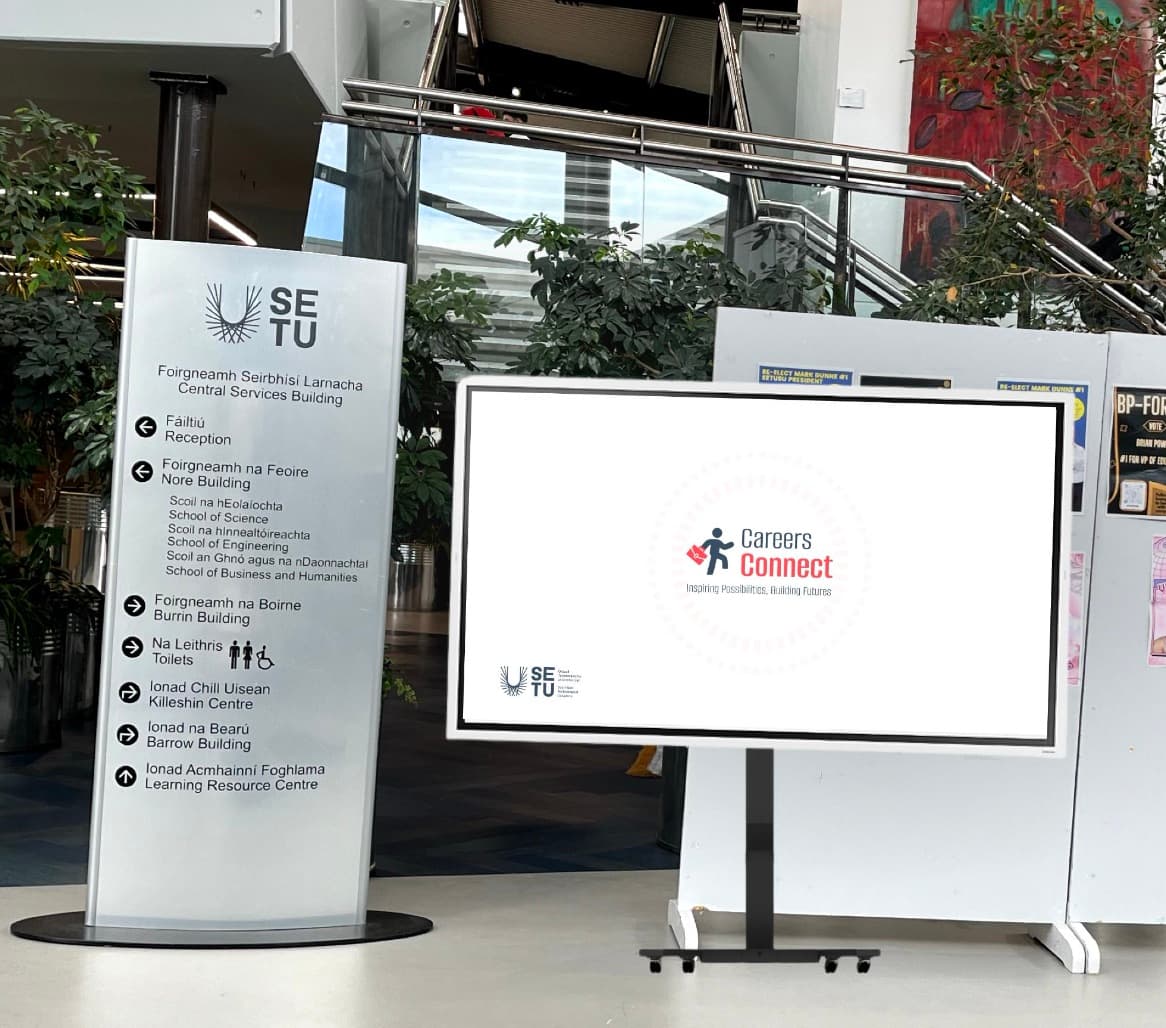
SETU Careers Connect product shown on a campus display
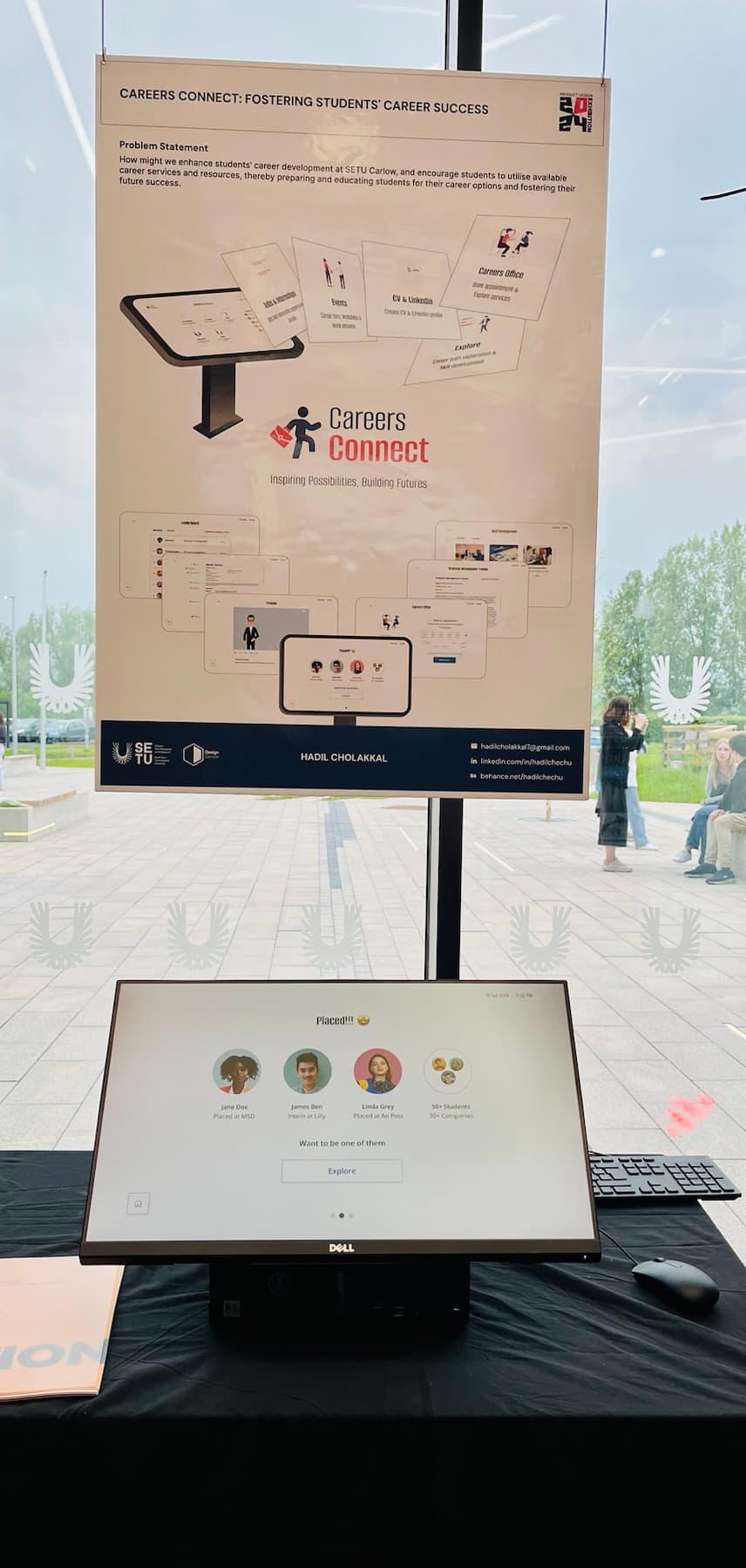
SETU Careers Connect exhibition poster and second product screen
Two screen showcase

Method

Double Diamond

Format

Interactive campus display

Artifact

Curated process book

Project overview

Career support needed a clearer first step.

Careers Connect was developed as a student-facing career development concept for SETU. The work explored how students discover career support, how the careers office communicates services, and how a digital touchpoint on campus could improve visibility and engagement.

Problem

Career support existed, but students could easily miss what was available or feel unsure about where to begin. The challenge was to make career development feel more visible, guided, and actionable without overwhelming students.

Who it was for

  • First-year students beginning to understand career options and skill gaps.
  • Final-year students preparing for jobs, internships, CVs, interviews, and next steps.
  • The careers office, which needed a more visible way to promote services and understand engagement.

Design direction

Careers Connect

The solution explored an interactive digital display on campus: a visible, low-pressure touchpoint for career-path exploration, CV review, skill development, job search support, and appointments with the careers office.

Process book

A selected flipbook from the full process.

A compact view of the pages that explain the design journey.
1 / 10
SETU Careers Connect process book page: Cover

Cover / drag page edge to flip

Key insights

  • Students needed career guidance to feel accessible in ordinary campus moments, not only through formal appointments.
  • Different student stages had different needs: discovery and confidence for early students, practical readiness for final-year students.
  • Personas and stakeholder mapping showed that career support needed to connect jobs, CV review, skills, appointments, and career-path exploration.
  • A public interactive display could increase awareness of services while giving students a low-pressure entry point.

Process

  • Used the Double Diamond process: discover, define, develop, and deliver.
  • Reviewed literature, competitor examples, and existing career-development touchpoints.
  • Created personas, stakeholder maps, and problem framing from research findings.
  • Explored an interactive campus display as the core design direction.
  • Developed information architecture, low-fidelity wireframes, high-fidelity screens, and a visual design system.

Final experience

A campus display for action, not just information.

  • Campus display home screen introducing Careers Connect.
  • Job and opportunity discovery screens.
  • Career points and skill-building guidance.
  • Careers office appointment booking.
  • Support screens for help, about, and service discovery.

Outcome

  • A concept that makes career services more visible in the campus environment.
  • A structured display experience for jobs, skills, CV support, appointments, and guidance.
  • A full process book showing the research, definition, ideation, prototyping, and final UI artifacts.

Reflection

Visibility creates confidence.

The project reinforced that career-development experiences need visibility and reassurance as much as information. Students need a clear first step before they can engage deeply with support.